Judgement: Tarot Card Meaning, Upright and Reversed
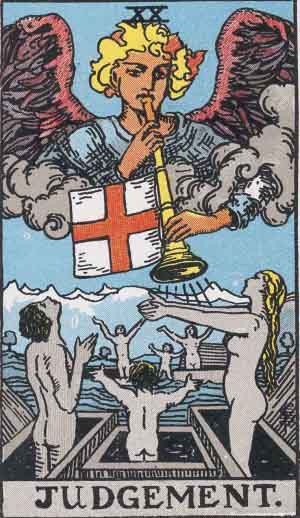
Judgement is the 20th card of the Major Arcana and represents waking, introspection, reckoning and a call to step into a more authentic version of yourself. It's the card of reassessment, a reminder that some moments require an honest look at where we've been before we can move ahead.
In the traditional Rider-Waite-Smith perspective, an angel, usually Gabriel, blows a trumpet from the clouds above. Figures ascend from open graves below, arms outstretched, answering the call. The image is set with a large body of water in the foreground and distant mountains in the backdrop.
One of Judgement’s key themes is addressed by the image: there is something urging you to wake up, take stock, and respond honestly to what your life has been, not what you’ve told yourself it was.
Judgement is more than calculating, or fear. It might be a time of real self-forgiveness, an opportunity to look at old choices with new eyes, or a summons to a more true way of life.
If you’re new to Tarot and want to see how Judgement fits into the greater system, check out our Tarot Card Meanings guide and our full Major Arcana reference. Judgement is at number 20, after The Sun and before The World, a position that signifies a final reckoning before the end of the trip.
Judgement at a glance
| Detail | Meaning |
|---|---|
| Judgement Number | 20 |
| Arcana | Major Arcana |
| Element | Fire in many modern Tarot traditions |
| Core Themes | Awakening, reckoning, self-evaluation, renewal, calling |
| Upright | Reflection, reckoning, awakening, rebirth, inner calling, self-evaluation |
| Reversed | Self-doubt, avoidance, harsh self-judgement, ignoring a calling, unresolved guilt |
History of the Judgement Tarot Card
To comprehend Judgement we need to understand the larger history of Tarot. The first evidence of the use of Tarot cards in Europe dates back to the 15th century, with the first surviving references said to have been made at the courts of northern Italy's Milan and Ferrara. Like the other cards of the Major Arcana, Tarot was originally a game of cards, not a tool of divination.
The earliest sequences of trumps often featured a card known as “The Angel” or “The Last Judgement,” drawing on traditional Christian themes of resurrection and divine retribution from Renaissance Europe. This religious setting was common to many early trump decks, and reflects the visual and theological vocabulary of the time.
The cards were used for fortune-telling and esoteric significance much later, mostly in the 19th century, when occult societies started to layer symbolic and divinatory meaning over a card game invented in the Renaissance.
The Rider-Waite-Smith Tarot, a deck developed in partnership with artist Pamela Colman Smith and Arthur Edward Waite, published in 1909, has given many modern readers the image they recognise today. The angel trumpeting, the figures striding and the graves opening create the visual language from which most modern Judgement cards now draw.
The Modern Tarot: From Judgement
The definition of Judgement has changed quite a lot over time. Earlier images, strongly linked with Christian eschatology, stressed divine reckoning, resurrection, and final moral accounting. Modern Tarot has widened this substantially, going from a strictly religious framework to personal awakening, self-reflection and inner calling.
This development is part of what makes Judgement an interesting text in contemporary readings. The card could be a real reckoning with previous mistakes, but it’s usually not about retribution. Is this an honest self-assessment leading to renewal? Or a call to something you’ve been avoiding? Usually context in the reading clarifies which.
Meaning of The Judgement Tarot Card
The iconography of Judgement is dramatic and significant, each piece contributing to a richer interpretation of the card.
The Angel and the Trumpet
The angel, usually named Gabriel, is a wake-up call, a command not so easily disregarded. The trumpet signals a moment of truth, whether it be an external incident or an internal realisation that cannot be evaded any longer.
The numbers just keep rising
The figures rising from their graves, arms outstretched, are people responding to that summons, waking up to a reality about themselves or their lives. Their stance is one of openness and preparedness, not resistance, an essential feature implying acceptance, not fear.
Open Graves
The cemeteries are the old versions of ourselves, old decisions or parts of life we have outgrown. Their emptiness implies that whatever is being left behind has done its job and may be let go.
The Water and the Mountains
The sea in the background might indicate the expanse of the unconscious or the deep depths behind the moment of awakening and the mountains could be the obstacles previously experienced on the journey so far. Together they frame this reckoning as part of a much bigger process.
The Cross on the Banner
The crimson cross on the angel’s banner is generally connected with balance, health and spiritual awakening. This brings the card’s iconography back to ideas of rebirth and integration as opposed to only religious judgement.
Number 20
From a numerology perspective, twenty lowers to two ( 2+0=2 ) , a number commonly associated with balance , cooperation and duality . Judgement follows The Sun (clarity, joy) and precedes The World (completion, completeness) and signifies the honest self-assessment that must be made before genuine fulfilment is realised. This is the card that tells the traveller, ‘Get right with your past before you fully move into what is to come.
The Importance of Upright Judgement
Upright Judgement often indicates a time of enlightenment, reflection or reckoning. It can be an awakening to a pattern you’ve been repeating; an invitation to a more true route or an opportunity to look back on prior decisions with new perspective. This card is not about punishment, but an honest, often liberating moment of self-evaluation.
You may experience judgement while you are:
A moment of insight or awakening The need to examine prior decisions A calling toward something more true Self-forgiveness or acceptance Rebirth after a tough time Reckoning with consequences A turning point requiring honesty Release of old guilt or shame Renewed feeling of purpose
The most important thing about Judgement is that it's an invitation, not a condemnation. This is not a card of heavy punishment for past errors. It’s about an honest reflection that offers a real chance for rebirth, an honest glance back that makes an honest move forward feasible.
Interpretation Reversed judgement
Reversed judgements can sometimes be a sign of not wanting to self-reflect, being overly self-critical or having trouble accepting a call for change. You can be avoiding a direct look at a pattern or decision, or being overly hard on yourself about prior mistakes instead of being kind and understanding.
It can also mean a disregard for an inner calling, feeling that things must change but not yet acting on it. In other interpretations, the inverted Judgement signifies unprocessed guilt or shame that hasn’t been handled.
The Reversed Judgement then questions
Are you avoiding a realistic assessment, or beating yourself up over something that needs greater compassion? Keywords for Reversed Judgements. Self doubt avoidance self criticism denial of a calling unresolved guilt fear of change difficulty forgiving oneself deferred reckoning resisting growth denial
Judgement in Love & Relationships
In a love reading, Judgement may indicate a point of reconsideration within a partnership or a reflection on prior romantic habits. Single? Judgement can be a reminder to take a look back at what you’ve learnt from previous relationships and apply that in your future, sometimes with an ex coming back to give you that sense of closure or clarity. If you are in a relationship, Judgement can be an honest talk, a turning point or a decision about whether the partnership genuinely reflects who you both are now.
The card often suggests that neither party will be helped by not looking honestly at the intricacies of a partnership. What comes out of that reflection tends to be more genuine than before.
Love Reversal Reading Judgement
In love, the reversed Judgement can imply you are avoiding the need to reflect on a relationship or you are being too hard on yourself over prior romantic decisions. It could be a sign of a hard time forgiving yourself or a spouse for past hurts. If you are asking about another person’s sentiments, the card may mean they are struggling with shame or reluctance they have not yet dealt with. This can lead to a sense of being stuck, when clarification is needed but not sought.
Appraisal as Emotions
If Judgement describes someone’s feelings, it could suggest they’re contemplating, re-evaluating, or going through some emotional awakening over the connection. They may be reconsidering what they really desire and maybe influenced by an awareness of prior trends. It is more likely to be an evaluative emotional state, contemplative rather than impulsive.
Intentions as Judgements
Judgement as intentions might be a sign that someone is rethinking their approach, driven by a desire for honesty or a new beginning. This means their next move will be based on true self reflection rather than a knee jerk reaction. There is often actual consideration about what would be most authentic here.
If you ask someone if they will do something and they say, “That’s a judgement,” they mean they have made a decision after thinking about it and looking at it again, not that they are doing it right now.
Career and Work Judgement
In a career sense judgement is typically a time of reflection, a call to more meaningful employment or a coming to terms with the implications of previous career decisions. This may mean:
A change of career path Craving for more fulfilling work Reflecting on previous career decisions Recognition or impact of previous decisions A major career decision Regeneration after a career slump Honesty check of your current situation Fresh motivation at work
The card says that a difficult but honest look at where you are in your work life might lead to important transformation. Think about it: Is what I am doing right now what I desire, or just what I fell into?
Career Judgement (Reversed)
Judgement, when reversed, can indicate that you are delaying a required re-evaluation of your professional life, or that you are being too hard on yourself for prior employment choices. Perhaps it is a calling for something that you have been ignoring or guilt over a past decision that is holding you back. The card hints it could be time to confront what you've been avoiding.
Judgement in Money
In a financial reading Judgement is often a time of facing the music on your past financial decisions, a true appraisal of your connection with money or the settlement of a long-standing financial concern. It can show the repercussions of past decisions coming to light, good or bad.
Reversed Judgement can mean:
Not being honest about your finances Feeling guilty about prior financial actions Not addressing a needed financial change Not forgiving past mistakes with money Financial reckoning delayed
The lesson with money of judgement is that honest self-assessment, even if difficult, tends to lead to healthier long-term decisions than avoidance.
Judgement Yes or No
Judgement is usually yes for a simple yes/no question, especially if the topic is about: Is it time for an honest appraisal Is a fresh start required Are former habits ready to be discarded A calling toward real transformation
So often the 'yes' of judgement is qualified by the need for authentic reflection beforehand. If reversed the response may swing toward not yet especially if you are still avoiding or have unresolved guilt
Advice From Judgement
The message of Judgement as your guidance card is frequently to take an honest look and then let yourself go on. Guilt, doubt, or unresolved sentiments regarding a past decision could need honest evaluation and not ongoing avoidance. Judgement says you face this head on. Compassion says no less for yourself than honesty.
Listen to the calling you’ve been avoiding. Think what historical patterns you are ready to release. Give yourself real self-forgiveness, where it is justified. At the same time, Judgement does not favour extreme self-punishment. Real reckoning brings clarity, not cruelty.
Judgement in the Position of the Spread
Judgement may carry more or less weight based on the card’s position in the spread.
The Judgement in the Past
Its prior position frequently points to a previous time of awakening, reappraisal, or reckoning. Today’s reality may be the outcome of choices you made after that realisation.
Present's Judgement
Judgement in the present indicates you could be undergoing a significant reappraisal or awakening. This is a good time to be honest about the moment, instead than racing ahead.
Judgement in the Future
In the future position, judgement might imply a coming day of reckoning, an awakening or a crucial reappraisal. And, when that moment happens, it is worth utilising it as a cue to think about what honest self-evaluation would look like.
Challenging judgement
Judgement as a problem can be about the difficulties of facing an honest reassessment you’ve been avoiding, or of giving yourself the self-forgiveness needed to move forward.
Judgement as an Effect
Judgement as impact typically indicates that a current course leads to a major reassessment, awakening or turning point.
Judgement and the Element it relates to
Judgement is connected with Fire in several modern tarot and esoteric systems. Fire is connected to transformation, rejuvenation and the kind of energy that comes from real enlightenment. These qualities resonate with Judgement’s concepts of reckoning and regeneration. Elemental correspondences, like other Tarot correspondences, will vary between traditions and decks, therefore it’s worth seeing them as one layer of interpretation rather than a firm rule.
Where Judgement Fits In The Fool’s Journey
After the clarity and delight of The Sun comes Judgement, the honest self-appraisal which can only be made if the clarity has been attained. Where The Sun brings real understanding, Judgement calls on the traveller to use that clarity to make a full accounting of the past, what's been learnt, what's been relinquished, and what needs to be resolved.
This is a major placement. Judgement is not a regression to previous guilt, but the required assessment that permits the traveller to approach The World, the last card of completion, with real integration rather than unfinished business. The calculation it depicts has its place in the greater arc; it assures nothing of consequence is left behind.
The Real Spiritual Meaning of Judgement
At a deeper level, judgement is about the relationship between honest self-assessment and genuine rejuvenation. We are reluctant to closely examine our past decisions because we fear what we will uncover, yet the Judgement card advises this kind of honest accounting is frequently more freeing than terrifying.
Experience teaches that waking often needs confronting what we have been avoiding, not to punish ourselves but to finally see it clearly enough to move beyond it. It prompts you to offer yourself the compassion that you would offer to another person with the same reflection.
The underlying message of the card is not 'you will be judged for your past. It is more like: you are being called to look honestly at where you have been, so you can step more completely into who you are becoming.
Tarot Reading: Judgement
If Judgement arises in a reading, think about what form of reckoning or awakening might apply to your situation. Have you been avoiding honestly looking at a past decision or pattern?
Are you being drawn toward something more real than where you are now? Are you willing to let go of guilt, shame? Are you being kind to yourself when you look back on where you have been?
Judgement may be a particularly powerful card when it is related to cards that signify change, endings or rebirth. It should always be read in relation to the question posed and the surrounding cards.
Want to find out what Judgement implies for your personal situation? Try our [Free Online Tarot Reading] and see how the card fits into the remainder of your reading.
Judgement and the rest of the Major Arcana
The cards that accompany Judgement are frequently a deepening of its themes of reckoning and awakening.
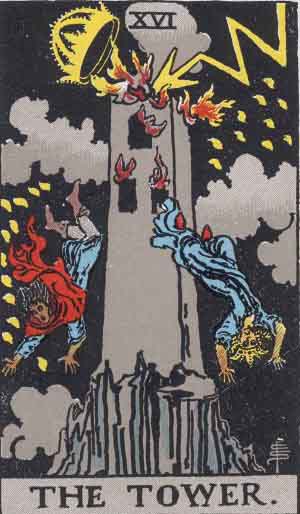
For example, Judgement and The Sun combined may imply an awakening that leads straight to real joy and clarity. It can mean a huge feeling of completion after an honest reckoning with Judgement with The World. Or with Death it might signify a great shift, with an ending and a rebirth. The Tower with judgement may be a sudden insight forcing a review of what is true. A judgement with The Star may indicate that hope and healing accompany a painful but necessary reckoning.
Explore the individual cards in our Major Arcana Tarot Cards guide and begin to realise how each one adds a different chapter to the overall Tarot journey.
Keywords Meaning of Judgement Tarot Card
Upright: Awakening, reckoning, contemplation, rebirth, self-evaluation, calling, renewal, forgiveness, honesty, turning point.
Reversed: Self-doubt, avoidance, self-judgment, ignoring a call, unresolved guilt, denial, resistance to growth, delayed reckoning.
Conclusion: What to Learn from the Judgement Tarot Card
Judgement is the card of awakening, of honest accounting, of the summons to rise into a truer form of yourself. It reminds you that an honest look at your past, without severity, may be really liberating, not something to be afraid of.
When Judgement comes up, ask yourself what calling you might be avoiding and whether or not you’re ready to give yourself the compassion you need to be able to move forward. It’s a crucial lesson: that true regeneration frequently starts with an honest look back.
You don't need all the answers to your history to answer the call forward. The only thing you have to determine is are you ready to rise and react. Read more about the Tarot journey in our [Major Arcana Tarot Cards guide]. Or try a free online tarot reading to find out what Judgement could mean in your reading.
Explore the Other Major Arcana Cards
Every Major Arcana card carries its own chapter of the tarot journey.
 The Fool
Card 0
The Fool
Card 0
 The Magician
Card 1
The Magician
Card 1
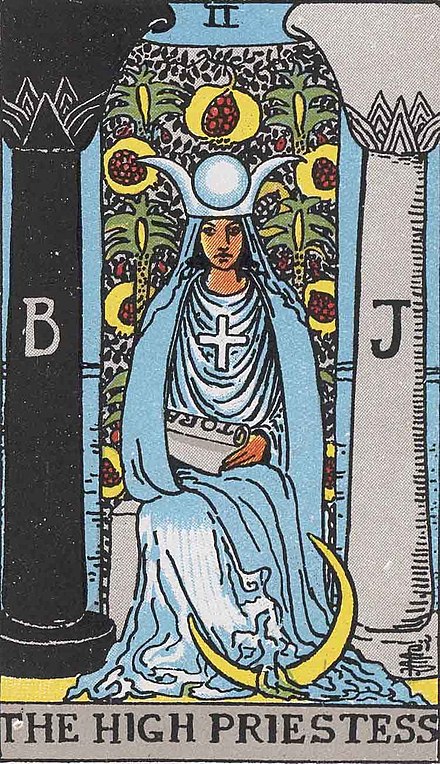 The High Priestess
Card 2
The High Priestess
Card 2
 The Empress
Card 3
The Empress
Card 3
 The Emperor
Card 4
The Emperor
Card 4
 The Hierophant
Card 5
The Hierophant
Card 5
 The Lovers
Card 6
The Lovers
Card 6
 The Chariot
Card 7
The Chariot
Card 7
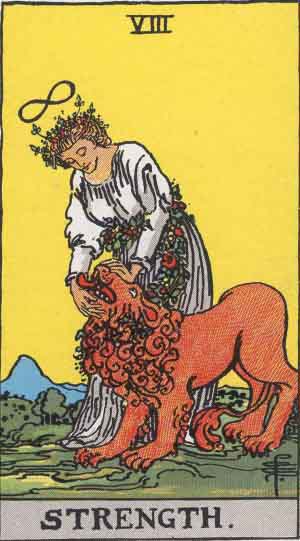 Strength
Card 8
Strength
Card 8
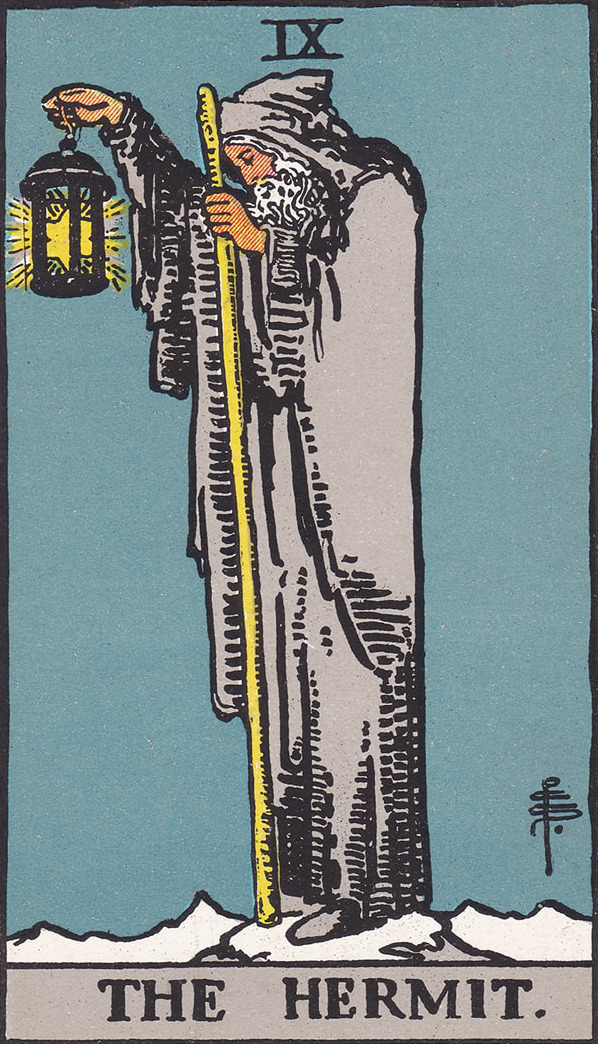 The Hermit
Card 9
The Hermit
Card 9
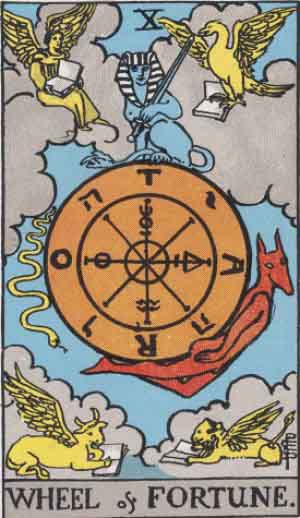 Wheel of Fortune
Card 10
Wheel of Fortune
Card 10
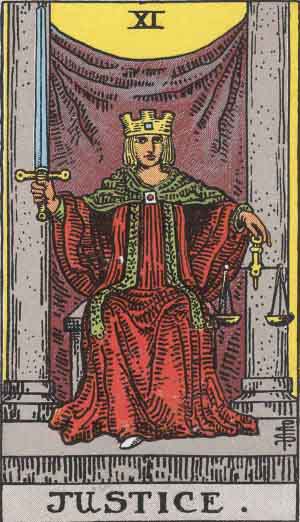 Justice
Card 11
Justice
Card 11
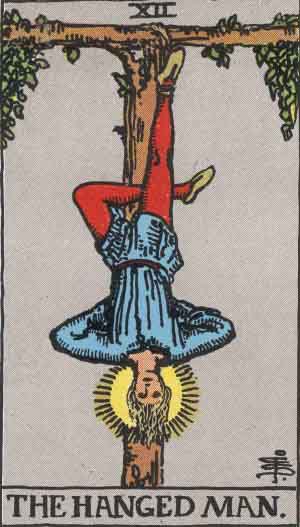 The Hanged Man
Card 12
The Hanged Man
Card 12
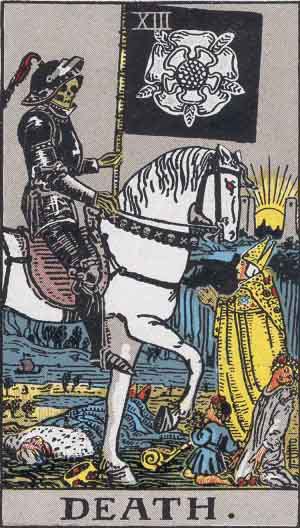 Death
Card 13
Death
Card 13
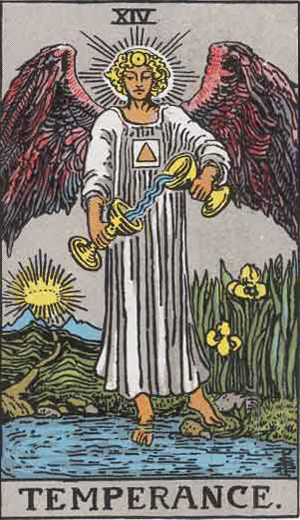 Temperance
Card 14
Temperance
Card 14
 The Devil
Card 15
The Devil
Card 15
 The Tower
Card 16
The Tower
Card 16
 The Star
Card 17
The Star
Card 17
 The Moon
Card 18
The Moon
Card 18
 The Sun
Card 19
The Sun
Card 19
 The World
Card 21
The World
Card 21
Frequently Asked Questions
What Does the Judgement Tarot Card Mean?
Judgement is the Awakening card, and it is about Reflection and Honest Reckoning. It commonly comes up when a Major Self-Evaluation or Turning Point is close at hand.
Is Judgement a positive or negative tarot card?
Judgement can be a bit intense as it entails reckoning with the past, but is usually seen as a good card. It signifies awakening, rebirth and the freedom of honest self-assessment.
What does Judgement mean in love?
Judgement in love can be a symptom of a need to re-evaluate the patterns of former relationships, an honest talk or a turning moment in a present relationship. It can also be about closure with a previous spouse.
What is Reversed Judgement?
Reversed Judgement can signal a refusal to look within when it’s required, self-recrimination, guilt that you haven’t dealt with, or dismissing an inner voice that urges you to make a change.
Is Judgement yes or no?
Judgement is often a yes, especially regarding questions of fresh starts, honest appraisal or substantial change. If reversed it may tend to not yet. Especially if avoidance is indicated.
What does Judgement represent, as feelings?
Judgement as feelings frequently signals a time of reflection, reconsideration or an emotional awakening, a time when someone is re-evaluating what it is they genuinely want.
What does Judgement mean in someone’s intentions?
As for intentions Judgement indicates a conclusion that comes from true self-reflection and honesty, sometimes still in process.
What does Judgement entail in a professional reading?
In career, Judgement might be about re-thinking your job path, a calling to a more meaningful employment or the fallout from your past career choices.
Why is the Judge-ment No. 20?
Judgement from the Major Arcana is 20, following The Sun and preceding The World. This positioning reflects its role as the necessary honest self-assessment before real fulfilment can be achieved.
Future position- what does Judgement mean?
In a future position, Judgement may signify a time of awakening, reckoning or major reassessment coming up.
What does Judgement signify spiritually?
Judgement, in the spiritual sense, is the freedom of honest self-assessment, the call to rise into a more authentic version of yourself after facing the past head-on.