Death: Tarot Card Meaning, Upright and Reversed
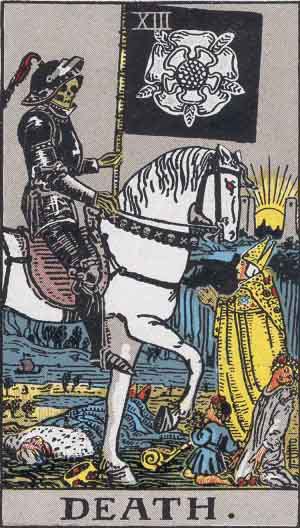
Of all the Major Arcana cards, none carries a heavier reputation than Death. Even the name itself is enough to make seasoned tarot readers a little uneasy, let alone a newcomer to the deck. But even with its gloomy moniker, Death is never, if ever, a real prophesy of physical death. Instead, it is one of the most transforming and ultimately uplifting cards in the tarot: a symbol of profound change, the clearing away of the old to make way for the new.
Death is numbered XIII and comes immediately after The Hanged Man in the conventional ordering of the Major Arcana. The Hanged Man is a willing halt and change of perspective, but death is the natural conclusion that follows; the literal termination of a chapter, relationship, philosophy or way of life that has run its course. It is a card of needed transition rather than tragedy and frequently results in a rejuvenation that could not have happened in any other way.
Death at a glance
| Detail | Meaning |
|---|---|
| Card | Death |
| Number | 13 |
| Arcana | The Major Arcana |
| Element | Water in many modern Tarot traditions |
| Core Themes | Transformation, endings, rebirth, release, transition, renewal |
| Upright | Endings, transformation, letting go, major change, rebirth, new beginnings |
| Reversed | Resistance to change, stagnation, fear of endings, inability to l |
Death Card Visual Symbolism
In the Rider-Waite-Smith deck especially the picture on this card is filled with symbolism far beyond its disturbing surface.
The Figure
Death is a skeletal figure in black armour, riding a white horse. The skeleton is what is left over when all the inessentials have been stripped away: the permanent structure underneath the surface. This is not a threatening figure, it is a figure that glides on with serene inevitability, unbothered and inexorable, like the natural cycles of life it embodies.
The White Horse
The horse that Death rides is spotless white, a colour generally linked with purity and, strangely, the impartial nature of this transition. The horse walks ahead steadily, implying that such change, difficult though it may be, takes place with a certain grace, and is not to be dreaded or battled.
The Fallen Formations
We see a fallen monarch, a begging bishop, a toddler and a virgin at the horse’s feet – all reacting differently to Death’s approach. There is a range of responses, as there are in every major transition, some people resist, others are afraid, some accept, but it reminds us that death and change come to us all, regardless of our status or position.
The Sun Rising
A sun rises between two towers in the background of several renderings. An important aspect in trying to grasp the card correctly is that even in the midst of an ending, a new beginning is already looming over the horizon. The dawn breaking behind Death is a metaphor of renewal after loss.
The White Rose Standard
Black banners and white roses are often used to symbolise death as well as purity, fresh beginnings and the beauty that can come from change. This minor but significant feature changes the whole card; there is loss, but there is also something wonderful silently taking root.
Upright Meaning of Death Card
When Death appears standing in a reading, it’s a good indicator that a major chapter is coming to a close. This closing may be hard, but it’s a needed and ultimately useful one.
General Meaning: Upright Death is hardly ever about real death. Instead, it represents major change: the ending of a job, relationship, belief system, habit or life phase that is no longer serving the querent’s progress. This card asks us to understand that certain things have to cease so that something better can begin. There is no use fighting against this natural process, it just prolongs the discomfort. Only through surrender is rejuvenation possible.
Death also bears witness to the transience of all that. Nothing stays the same forever, and this card reminds us that change, however difficult, is a fundamental and sometimes healthy element of life's rhythm.
1. Love & Relationships In relationship readings, Death can signify that a relationship has come to an end, or in the case of continuous relationships, the termination of an old and harmful dynamic that makes space for a stronger and more true connection. It is often a signal of long-needed closure – a break up, a hard but honest conversation, or the discharge of old resentments that have been holding back a partnership. For singles, Death can be the end of an old dating pattern, making way for someone new, or shedding the emotional baggage from a prior relationship so you can step forward with a clear heart.
2.Career & Finances In the workplace, Death is often a symbol of the end of a job, project or career chapter. It can be unsettling but often clears the way for a more rewarding opportunity. It could also mean the end of an old style of functioning, a change in the industry or the culmination of a long discussion. Financially this card might suggest the end of some financial problem, whether it’s a debt finally being paid off or an old financial habit being released in favour of healthy habits.
3.Wellness In health readings, Death might represent the conclusion of a disease or difficult phase of health, or the need to abandon toxic behaviours and replace them with new, more helpful routines. Note that this card is significantly more symbolic than it is actual, even in the health context.
4.Spirituality Spiritually, Death implies fundamental transition – the loss of an old identity or belief system to allow for deeper progress. Many spiritual traditions speak of this type of symbolic death as a prerequisite for true awakening, a necessary dissolving before a more authentic self may arise.
Reversed Death Card Interpretation
When Death is reversed, the themes of transformation and release are often stuck, rejected, or incomplete. Reversed Death is typically about resisting change: clinging to a position, relationship or identity long after it has ceased to serve you. It can be a sign of stasis due to fear of the unknown, or of a change being slower and more painful than it has to be because of that reluctance.
This reversal can also be a fear of loss so big that it stops any forward movement altogether. Or it may be a metamorphosis that is already happening but not yet complete, a gradual unfolding rather than an abrupt shift.
1. Love & Relationships Reversed Death in relationships can mean staying in a relationship for too long because of fear, habit or attachment rather than real compatibility. It can also mean that you are not able to let go of a prior relationship, so preventing future ones from flourishing.
2.Careers & Finances In the workplace, it might be a sign of sticking to a job or career that no longer advances your development out of fear of uncertainty, rather than true happiness. Financially, it might be a sign that you’re delaying important adjustments in your spending patterns or financial structures, which continues an unhealthy cycle.
3. Health In health-related situations, reversed Death might signify a resistance to making required adjustments to one’s lifestyle, or a recovery that is stalled due to an unwillingness to totally let go of old habits or behaviours.
4.Spirituality Spiritually, this reversal is often indicative of fear-based resistance to essential inner reform, clinging to an old identity or worldview even when it no longer fits, out of comfort or fear rather than genuine conviction.
Death: A Yes or No Deck
Upright Death is typically a “yes” when referring to ending a chapter, putting things to rest or moving on from a stale condition. When reversed it can mean "no" or "not yet." There may be some resistance to the change that is needed that is currently blocking progress.
Death + Other Cards
Tarot cards rarely give the whole tale by themselves. Their significance changes depending on their neighbours in a spread.
Upright Combos
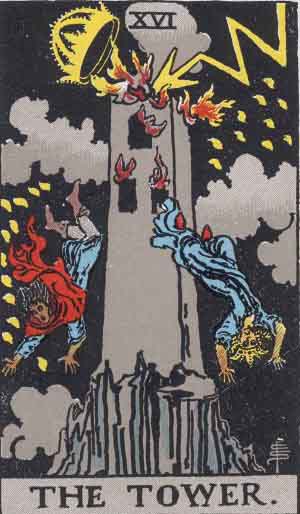
- Death and The Tower: A dramatic, sudden conclusion that is ultimately an opening for major rebuilding.
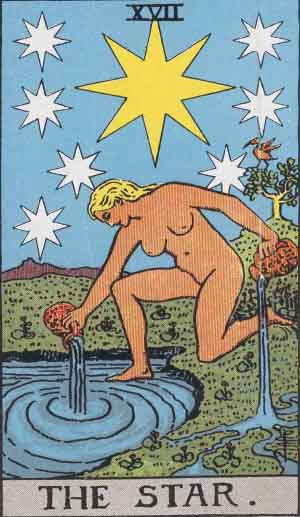
- Death and The Star: Hopeful, healing rebirth after loss or transition that must take place.
- Death and The Sun: A happy new beginning sprung right from a significant ending.
- Death and The Fool: The start of a brand new chapter, the ending of a chapter closed in fullness.
- Death and The Wheel of Fortune: A great change in the natural order of things.
- Death and Ten of Swords: An ending, final and irreversible, painful yet necessary for closure.
Reversed Combos
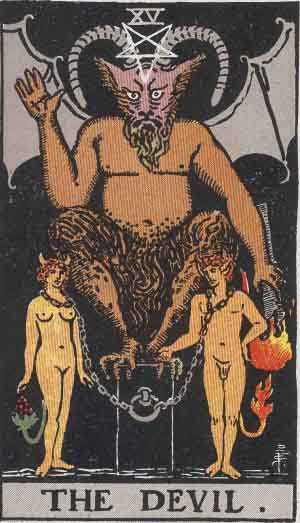
- The Devil and Death (reversed): Stuck in a position you know you should move on from but aren’t ready or able to.
- Death (reversed) + Eight of Cups: Wanting to move on emotionally but struggling to really take the step of leaving.
- Death (opposite) and The Hierophant: Adherence to old ideas or customs; seeking security rather than significance.
- Death (Reveresed) + Four of Wands A required transition is delayed, but otherwise steady conditions.
- Death (reversed) & The Star: Healing is happening slowly and gradually and is not yet entirely in effect.
- Death (reversed) and Two of Swords A choice you’ve been putting off is dragging out a conclusion that’s already occurred.
Death and Astrology and Numerology
Scorpio is the zodiac sign of Death, the sign of the scorpion. It’s ruled by Mars and Pluto. Scorpio’s elements of transition, intensity, and rebirth are strongly tied to the core meaning of the card: the idea that real rejuvenation frequently demands going through darkness or hardship first.
The Death card is the XIII card, which reduces to the number 4 (1+3=4) in numerology, a number of structure, stability and foundations. It suggests that even in the midst of radical change there is an underlying order; that endings eventually provide the secure ground on which to build new structures.
The Death Card: Working With It
Upright
If Death features heavily in your reading, consider it an invitation to: "Accept the ending. Delaying an essential conclusion does nothing to ease the pain. Let the change unfold spontaneously. Let go of what no longer serves you. Determine which behaviours, relationships or beliefs are ready to be released. Trust the process of rebirth. Endings are openings for fresh beginnings, even if the new chapter is not yet evident. Don’t cling to the past. To grow you have to let go of the emotional attachment to what has already played itself out. Be nice to yourself. Even “good” changes can be painful. Experience this fully before you move on.
Reversed
If Death appears upside down, do the following instead. Find out what you are resisting. Be honest with yourself about what ending you are avoiding and why. Look at your dread of the unknown. Resistance to change is often not because people love what is, but because they are unsure about what is going to be. Take a modest step forward. If a whole change feels overwhelming, begin with one small step toward letting go. Beware of self-sabotage. Ask yourself if you are avoiding dealing with the situation, and instead, dragging it out unknowingly. If you need help, get it. Especially for the major shifts that we fight against, it’s often simpler to get through them with help of trusted friends, family or specialists.
Conclusion
The Death card is one of the most misunderstood cards in the tarot deck, and has one of the most hopeful messages of the Major Arcana. It is not a symbol of physical death, but of the inevitable ends that clear the way for significant growth and rejuvenation. This card, whether upright or reversed, is a reminder to relinquish what we no longer need, to embrace the natural cycle of change, and to believe that something new and often better awaits us on the other side of every ending.
Explore the Other Major Arcana Cards
Every Major Arcana card carries its own chapter of the tarot journey.
 The Fool
Card 0
The Fool
Card 0
 The Magician
Card 1
The Magician
Card 1
 The High Priestess
Card 2
The High Priestess
Card 2
 The Empress
Card 3
The Empress
Card 3
 The Emperor
Card 4
The Emperor
Card 4
 The Hierophant
Card 5
The Hierophant
Card 5
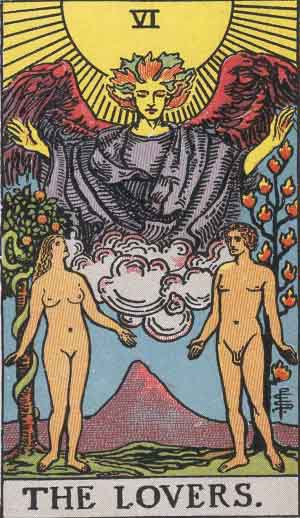 The Lovers
Card 6
The Lovers
Card 6
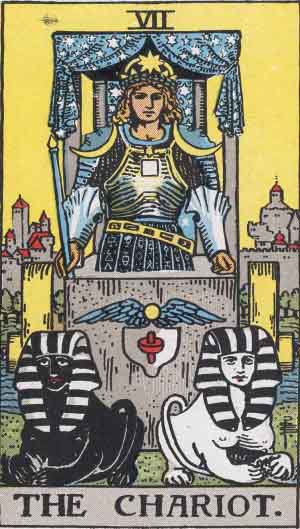 The Chariot
Card 7
The Chariot
Card 7
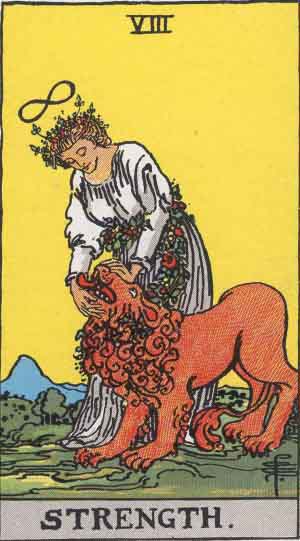 Strength
Card 8
Strength
Card 8
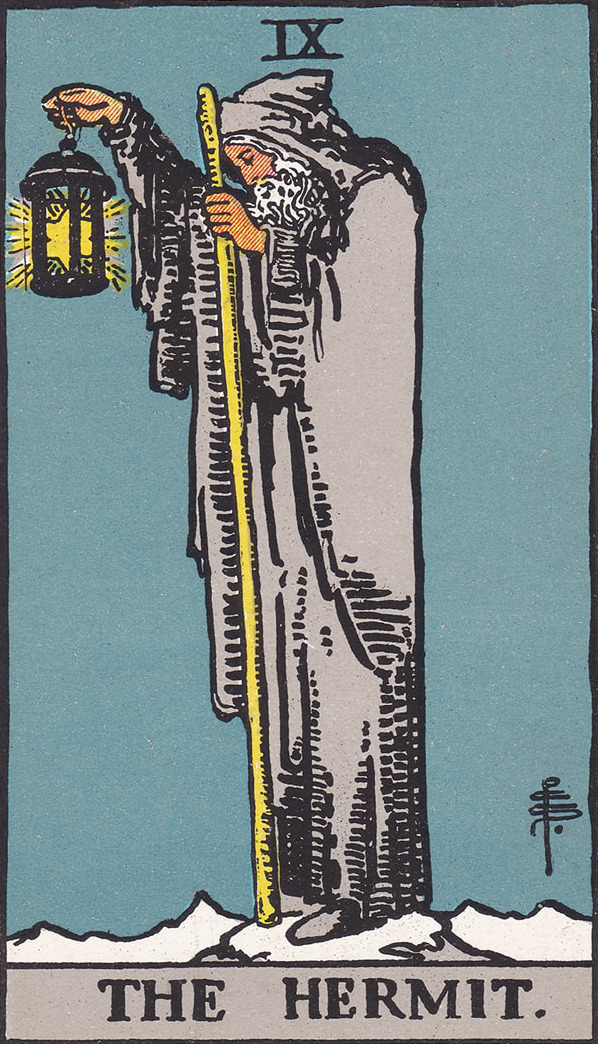 The Hermit
Card 9
The Hermit
Card 9
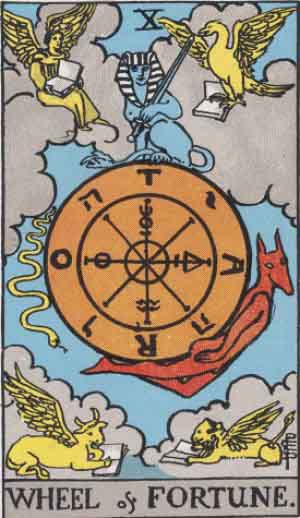 Wheel of Fortune
Card 10
Wheel of Fortune
Card 10
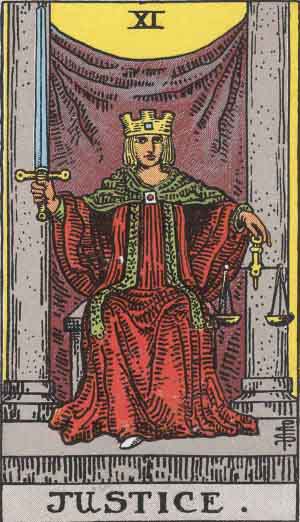 Justice
Card 11
Justice
Card 11
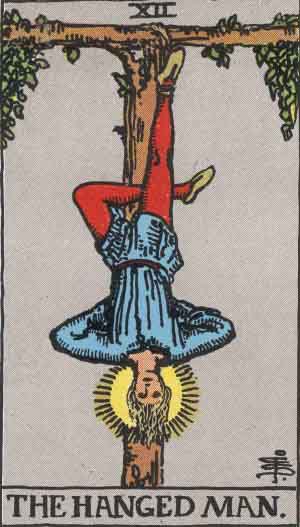 The Hanged Man
Card 12
The Hanged Man
Card 12
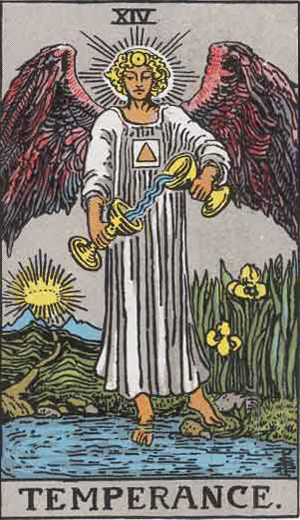 Temperance
Card 14
Temperance
Card 14
 The Devil
Card 15
The Devil
Card 15
 The Tower
Card 16
The Tower
Card 16
 The Star
Card 17
The Star
Card 17
 The Moon
Card 18
The Moon
Card 18
 The Sun
Card 19
The Sun
Card 19
 Judgement
Card 20
Judgement
Card 20
 The World
Card 21
The World
Card 21
Frequently Asked Questions
1. Does Death mean that someone is about to die?
Nope. Despite its name, the Death card virtually never means literal, physical death. It stands for metamorphosis, for the end of one thing and the birth of another.
2. What is the meaning of the Death card in love reading?
It’s often a symptom of the end of a relationship, or the end of an unhealthy habit within a relationship that allows space for a healthier one. For singles, it can be a signal to release old patterns before a new relationship can take root.
3. Is Death a horrible card to draw?
Not by nature. There is a sense of finality to it, which can be hard, but it usually brings about constructive change and essential progress. The reverse is generally more difficult than the upright card, which is about resistance to change.
4. What does Death mean for questions about your career?
It often indicates the end of a work, project or period of a career – leading to something more satisfying. The point is not the loss of jobs per such, but the natural transition.
5. Is Death a yes/no card?
It's often "yes" when it's upright, especially for queries concerning stopping something or moving on. Reversed it’s more “no” or “not yet” because of reluctance or fear that blocks the change that needs to happen.
6. What sign of the Zodiac is linked with Death?
Scorpio is the sign of death, the sign of metamorphosis, of intensity and of rebirth.
7. What is the meaning of the white rose on the banner of Death?
The white rose is a symbol of purity and new beginnings, a reminder that there is often beauty and rejuvenation that follows even the hardest endings.
8. Why is Death riding a white horse?
The white horse represents the dispassionate inevitability of this sort of shift. It comes to all of us in a steady, quiet way. It comes to you, no matter who you are. Just like the natural rhythms of life and change.
9. Difference between Death upright and reversed?
Upright Death signifies acceptance and the moving through of an inevitable ending. Reversed Death might talk about stalling or rejecting the ending, frequently out of dread, which can extend agony needlessly.
10. Is death a sign of something good?
Yes, often, very often. Although the end of something can often be difficult, this card often signifies a cleaning out of what no longer serves you, so as to make room for important, constructive progress.
11. What does it mean if I draw Death reversed?
See what change you are refusing or avoiding and carefully explore the fear behind that resistance. One modest step toward release can assist ease the transition that has already begun.