Nine of Swords: Facing the Fears That Keep You Awake
The Nine of Swords is the ninth card of the Suit of Swords and represents anxiety, worry, fear, and sleepless nights. After the feeling of being trapped in the Eight, this card shows the mind turning on itself in the dark. It is the moment worry takes over: the 3 a.m. thoughts, the endless "what ifs," the dread that feels bigger than the facts. It is a card of mental distress, but also of recognition, because naming a fear is the first step toward easing it.
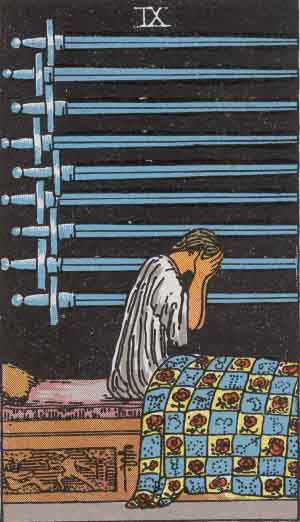
In the Rider-Waite-Smith deck, a figure sits upright in bed, face buried in their hands, as if woken by a nightmare. Nine swords hang horizontally on the dark wall behind them. The bed is covered with a quilt decorated with roses and astrological symbols, and the bed frame is carved with a scene of one figure defeated by another.
The image carries one of the main themes of the Nine: the swords are on the wall, not in the person. Anxiety can feel like a physical attack, yet it often lives in thoughts that look far larger at night than they do by day.
If you are new to tarot, read our Tarot Card Meanings guide and our Suit of Swords guide to see how this card fits into the wider system. As the number nine, this card carries the energy of completion and culmination, which in Swords shows up as worry reaching its peak before it can release.
The Nine of Swords at a Glance
Nine of Swords at a glance
| Detail | Meaning |
|---|---|
| Card | Nine of Swords |
| Number | 9 |
| Arcana | Minor Arcana |
| Suit | Swords |
| Element | Air |
| Astrological association | Mars in Gemini in the Golden Dawn system |
| Core themes | Anxiety, worry, fear, nightmares, guilt, mental distress |
| Upright | Anxiety, sleepless nights, overthinking, guilt, nightmares, mental anguish |
| Reversed | Relief, release, hidden worries, seeking help, recovery, lingering anxiety |
Nine of Swords Tarot Card History
Swords are one of the four suits of early European card decks of the 15th century. In older Italian and Spanish decks, the number cards showed only the swords themselves, arranged in simple patterns. The Nine of Swords would have been nine blades, with no bed, no sleeper, and no sense of night.
Tarot began as a card game, and its use for divination developed later, mostly in the 18th and 19th centuries. As tarot became part of esoteric traditions, the Nine of Swords was linked to Mars in Gemini in the Golden Dawn system. Mars is the planet of aggression and agitation, and Gemini is an Air sign tied to the restless, chattering mind. This pairing is often read as a mind in turmoil, which fits a card about anxiety and intrusive thoughts.
The image most readers know today comes from the Rider-Waite-Smith deck of 1909, created by Arthur Edward Waite and illustrated by Pamela Colman Smith. Smith's figure waking in distress gave the card its intimate, human quality, and it shaped nearly every modern version of the card.
Symbolism of the Nine of Swords
The Figure Sitting Up in Bed
The figure has woken suddenly, perhaps from a nightmare or a spiral of worry. The posture shows exhaustion and distress. It captures the feeling of being alone with your thoughts at the hour when everything seems heavier.
The Hands Over the Face
Covering the face suggests despair, shame, or the wish to shut out what is troubling them. It can also reflect the feeling that no one else can understand or help. Yet the hands also show that the pain is being felt, not ignored, which is a start.
The Nine Swords on the Wall
The swords hang in the dark, floating above the bed. They represent fears, regrets, and anxious thoughts. They are not touching the person, which hints that the threat is mostly mental. They are also arranged neatly in a row, showing how worries can seem orderly and relentless.
The Black Background
The dark wall stands for the night, the unknown, and the feeling of having nowhere to turn. It reflects how uncertainty makes fear grow. Darkness is also temporary. Morning follows.
The Rose and Zodiac Quilt
The quilt is a bright, hopeful detail. Roses are often linked to love and care, while the astrological symbols suggest the larger pattern of life beyond this moment. It reminds us that comfort and perspective are still present, even in distress.
The Carved Bed Frame
The carving at the foot of the bed shows a figure lying defeated beneath another. It is often read as a reflection of suffering or loss, and as a reminder that the fear may be tied to something deeper, such as guilt or past events.
The Number Nine
Nine is the number of completion, culmination, and the final stretch before an ending. It often shows a point where energy is nearly spent. In Swords, the Nine shows the mind at its most anxious, with worry at its peak. Yet nine is also close to ten, which suggests that the lowest point may be near its turning. It reminds us that this level of distress is not meant to last.
The Upright Nine of Swords Meaning
The upright Nine of Swords usually signals anxiety, worry, or emotional distress. You may be struggling with racing thoughts, sleepless nights, or guilt you cannot shake. The card often points to a situation where the fear is larger than the reality, or where worry has become a habit that feeds itself.
The Nine of Swords may appear when you are:
- - Lying awake with worry
- - Caught in overthinking or "what if" spirals
- - Carrying guilt or regret
- - Experiencing nightmares or intrusive thoughts
- - Feeling overwhelmed and alone
- - Dreading a situation that has not happened yet
- - Hiding your distress from others
- - Reaching a point of mental exhaustion
The key lesson is that thoughts are not always facts. The card does not dismiss your feelings, but it asks you to look at them honestly. Which worries are based on real events, and which are the mind's way of preparing for the worst? Speaking your fears aloud, to a friend, a journal, or a professional, can often shrink them.
The Nine of Swords Reversed Interpretation
Reversed, the Nine of Swords often points to relief. The worst of the anxiety may be passing, and you may be finding ways to cope, rest, or seek help. It can show that dawn is arriving after a long night.
The reversed card can also suggest:
- - Relief and release from worry
- - Reaching out for support
- - Recovery from anxiety or burnout
- - Learning to manage thoughts
- - Hidden or suppressed worries
- - Ignoring distress instead of facing it
- - Lingering anxiety that needs attention
- - Gradual improvement, not instant calm
The reversed Nine asks: are you truly letting go of worry, or are you pushing it down? Suppressed fears do not disappear. If anxiety feels overwhelming or persistent, speaking with a doctor or mental health professional is a sign of strength, not weakness.
Keywords for the Nine of Swords Reversed
- Relief
- Release
- Recovery
- Seeking support
- Hidden worries
- Suppressed fear
- Lingering anxiety
- Improved rest
- Coping
- Hope
The Nine of Swords in Love & Romance
In love readings, the Nine of Swords often points to anxiety about relationships. If you are single, it may suggest fear of rejection, loneliness, or worry that you will never find love. Past hurts may be replaying in your mind and making it difficult to trust. The card encourages you to treat yourself with compassion and to challenge harsh thoughts about your worth.
If you are in a relationship, the Nine can show worry, insecurity, or guilt. You may be overthinking your partner's behaviour, fearing the worst, or carrying unspoken concerns. It can also point to stress affecting intimacy and communication. The card encourages honest conversation. Often, sharing a worry reduces its power, and you may find that reality is gentler than your fears.
The Nine of Swords in Love Reversed
Reversed, the Nine of Swords in love often shows relief from anxiety. You may be gaining reassurance, speaking openly, or beginning to trust again. It can also suggest healing after a painful period. On the other hand, it may show that worries are being hidden or ignored. Take time to be honest about what you feel, and seek support if you need it.
The Nine of Swords as Feelings
As someone's feelings, the Nine of Swords suggests anxiety, worry, or emotional strain. They may be overthinking, feeling guilty, or struggling with fear about the relationship or something else in their life. They may find it hard to relax or open up. The card often shows that their mind is busy and their heart is heavy, rather than a lack of care.
The Nine of Swords as Intentions
When asking about someone's intentions, the Nine of Swords suggests they may be too anxious or preoccupied to act clearly. They might want to move forward but be held back by worry, guilt, or fear of making a mistake. Their behaviour may seem inconsistent because they are overwhelmed. Reversed, it can indicate that their worries are easing and their intentions are becoming clearer.
The Nine of Swords in Work & Career
The Nine of Swords in a career reading often points to stress, pressure, or worry about work. It can indicate:
- - Anxiety about performance or job security
- - Sleepless nights over deadlines
- - Burnout and mental exhaustion
- - Fear of failure or criticism
- - Guilt over a mistake
- - Overwhelming workload
- - Worry about a decision or change
- - Difficulty switching off from work
The card advises you to protect your mental health. Break large tasks into smaller steps, set boundaries around work hours, and talk to someone you trust about the pressure. Worry often eases when it is turned into a plan.
The Nine of Swords in Career (Reversed)
Reversed, the Nine of Swords can show relief from work stress, or a move toward a healthier balance. You may be getting support, setting boundaries, or finding solutions that ease the pressure. It can also suggest that stress is being ignored or hidden, which can lead to burnout. Pay attention to your limits, and ask for help early.
The Nine of Swords in Money
In financial readings, the Nine of Swords can indicate worry about money, debt, or the future. You may be losing sleep over bills, or imagining worst-case scenarios. The fear can feel bigger than the facts, though real challenges may exist.
When reversed, it can mean:
- - Relief from financial stress
- - Seeking advice or support
- - Facing the numbers honestly
- - Avoiding money problems out of fear
- - Lingering anxiety about security
The card encourages you to replace dread with information. Write down your figures, make a simple plan, and consider speaking to a trusted advisor. Clarity often calms anxiety.
The Nine of Swords: Yes or No
For a yes or no question, the Nine of Swords is generally a "no." It suggests that the situation is clouded by worry, stress, or fear, and that the outcome may not be what you hope for. It does not predict disaster, but it shows that anxiety is playing a large part.
The card is more likely to point toward "no" when the question involves:
- - Making a decision while anxious
- - A situation filled with stress or guilt
- - Hoping for quick relief
- - Acting out of fear
If the card is reversed, the answer may shift toward "yes" or "eventually," as relief and recovery begin. Be patient as the worry fades.
The Nine of Swords Advice
When the Nine of Swords is the advice card, the message is to be gentle with yourself and to speak your worries aloud. Do not face the night alone. Share your thoughts with a friend, write them down, or seek professional support if anxiety feels heavy.
Try to separate facts from fears. Ask what is actually known, and what is only imagined. Rest, routine, and kindness toward yourself can make a real difference. The morning often looks different from the night.
The Nine of Swords in Different Spread Positions
The Nine of Swords in the Past
You may have gone through a period of anxiety, guilt, or sleepless nights. Echoes of that time may still be shaping your thoughts today.
The Nine of Swords in the Present
You are experiencing worry, stress, or mental strain. It may be time to reach out, rest, and look at your fears more clearly.
The Nine of Swords in the Future
A stressful period or source of worry may be ahead. It can also be a reminder to build support and healthy habits before pressure builds.
The Nine of Swords as a Challenge
The challenge may be managing anxious thoughts, letting go of guilt, or asking for help when you feel alone.
The Nine of Swords as an Outcome
The situation may involve stress or worry, but it can also lead to relief, understanding, and a calmer mind once you face your fears.
The Nine of Swords and Its Elemental Correspondence
The Nine of Swords is linked with Air, the element of thought and communication. In many systems, it is also connected to Mars in Gemini. Mars relates to agitation and intensity, while Gemini is an Air sign associated with the busy, restless mind. Together they reflect the card's theme of racing thoughts and mental distress. Tarot correspondences vary between traditions and decks, so treat them as guides rather than fixed rules.
The Deeper Spiritual Meaning of the Nine of Swords
Spiritually, the Nine of Swords is about the dark night of the mind. It reminds us that fear, guilt, and worry are part of the human experience, and that they lose power when brought into the light. The card invites you to meet your inner struggles with compassion rather than judgement.
It also teaches that healing often begins with honesty and connection. When we share our burdens, we discover that we are not alone. The Nine of Swords asks you to trust that the night will pass, and to take gentle steps toward rest, support, and peace.
Tarot Reading: Nine of Swords
When the Nine of Swords appears, reflect on these questions:
- - What worries are keeping you awake?
- - Which fears are based on facts, and which on imagination?
- - Are you carrying guilt that you could address or release?
- - Who could you talk to about how you feel?
- - What would help your mind rest tonight?
The Nine is especially meaningful alongside cards that signal healing, hope, or support. Always read it in context with the question and the surrounding cards.
Want to know what the Nine of Swords means for your own situation? Try our Free Online Tarot Reading and see how it connects with the rest of your spread.
The Nine of Swords and Other Cards
- Nine of Swords and The Moon: Deep fears, illusions, and anxiety
- Nine of Swords and The Star: Hope returning after a dark time
- Nine of Swords and Temperance: Calming the mind and finding balance
- Nine of Swords and The Hermit: Facing your thoughts in solitude
- Nine of Swords and Strength: Gentle courage in the face of fear
Explore the rest of the suit in our Suit of Swords guide.
Nine of Swords Tarot Card Keywords
Upright:
- Anxiety, worry, fear, sleepless nights, nightmares, guilt, overthinking, mental anguish, despair, stress
- Reversed:
Relief, release, recovery, seeking support, hidden worries, suppressed fear, lingering anxiety, improved rest, coping, hope.
Conclusion: Key Takeaway from the Nine of Swords
The Nine of Swords is the card of anxiety, worry, and the long night of the mind. It reminds you that fear can feel larger in the dark, and that sharing your burden is often the first step toward relief.
When the Nine appears, ask yourself what you are afraid of, what is real and what is imagined, and who can support you. The night is hard, but it does not last forever.
Learn more in our Suit of Swords guide, or try a free online tarot reading to see what the Nine of Swords means in your own spread.
Explore the Other Swords Cards
Each card in the Suit of Swords marks its own stage, from the Ace to the King.
 Ace of Swords
Swords · Ace
 Two of Swords
Swords · Two
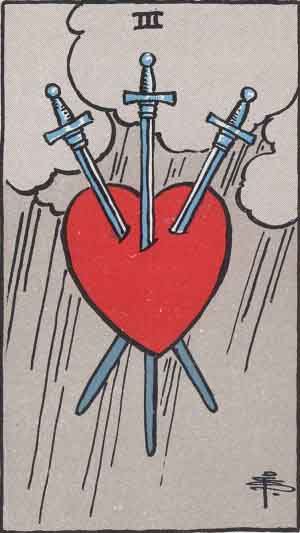 Three of Swords
Swords · Three
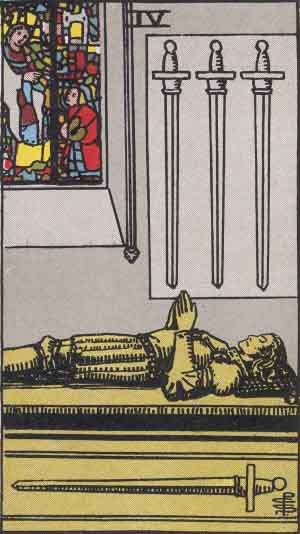 Four of Swords
Swords · Four
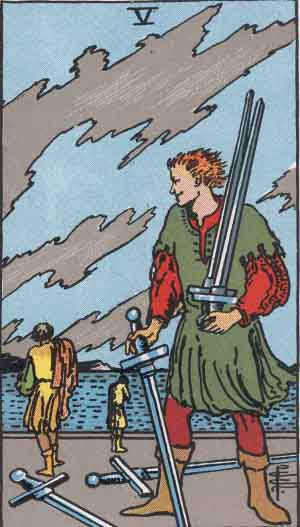 Five of Swords
Swords · Five
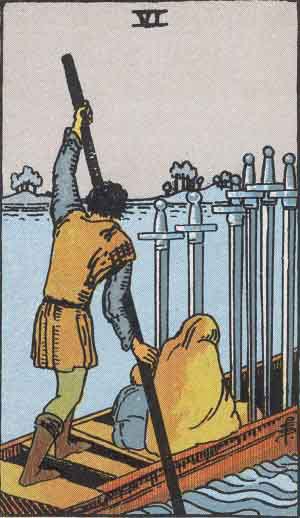 Six of Swords
Swords · Six
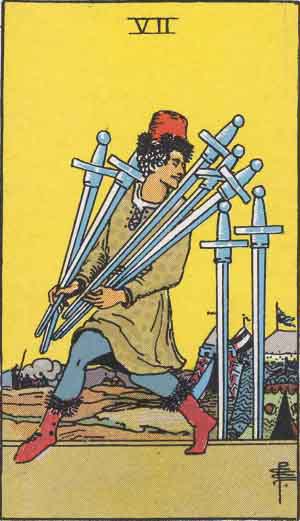 Seven of Swords
Swords · Seven
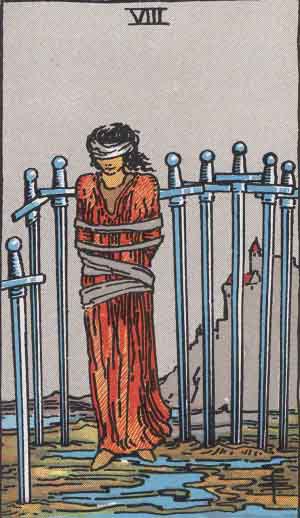 Eight of Swords
Swords · Eight
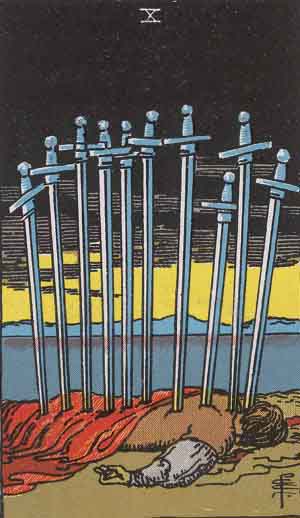 Ten of Swords
Swords · Ten
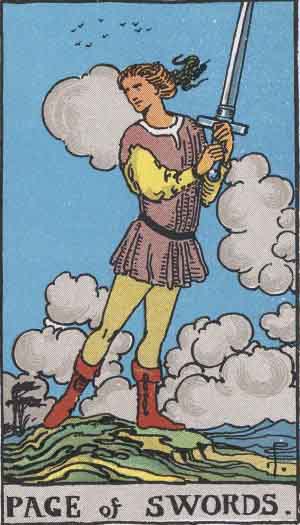 Page of Swords
Swords · Page
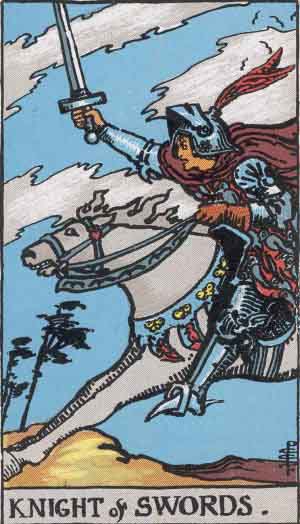 Knight of Swords
Swords · Knight
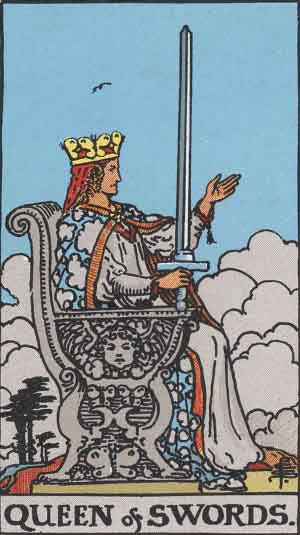 Queen of Swords
Swords · Queen
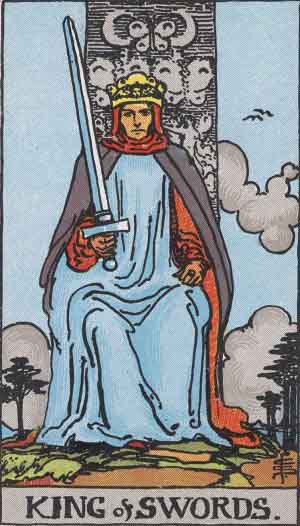 King of Swords
Swords · King
Frequently Asked Questions
What is the Nine of Swords tarot card meaning?
The Nine of Swords represents anxiety, worry, fear, and sleepless nights. It often appears when the mind is overwhelmed by stress, guilt, or "what if" thinking.
Is the Nine of Swords a negative card?
It deals with painful feelings, but it is also a card of recognition. It shows how worry can grow in the dark and points toward relief through honesty and support.
What does the Nine of Swords mean in love?
In love, it suggests anxiety, insecurity, or overthinking. It encourages open communication and self-compassion.
What does the Nine of Swords reversed mean?
Reversed, it suggests relief, recovery, and reaching out for support. It can also mean hidden worries or lingering anxiety.
Is the Nine of Swords a yes or a no?
Usually a "no," since it points to worry and a clouded situation. Reversed, it may lean toward yes as relief arrives.
What does the Nine of Swords mean as feelings?
It suggests anxiety, worry, or emotional strain. The person may be overthinking and finding it hard to relax or open up.
What does the Nine of Swords mean as intentions?
It suggests they may be too anxious to act clearly. Reversed, it can indicate their worries are easing.
What does the Nine of Swords mean in a career reading?
It points to stress, burnout, or worry about work. It advises setting boundaries, breaking tasks down, and seeking support.
What zodiac sign or planet is the Nine of Swords?
In the Golden Dawn system, it is linked to Mars in Gemini. Correspondences vary between traditions and decks.
What does the Nine of Swords mean in the future position?
It suggests a stressful period ahead, and a reminder to build support and healthy habits early.
What is the spiritual meaning of the Nine of Swords?
It represents the dark night of the mind, the power of honesty and connection, and the trust that the night will pass.